
RSA Arzaga: The Residential Care Home of the Jewish Community of Milan — a model for the future where technology and humanity meet

New challenges, new approaches to care, and a single mission: enhancing the value of the elderly person. Residential Care Facilities are changing their face. No more anonymous corridors and rigid routines: today’s facilities are conceived as places of life, not merely of care, where technology and humanity come together to restore dignity, autonomy and value to each individual.

The goal is clear: to place the person at the centre. It is not only about managing chronic conditions or age-related fragility, but about creating personalised pathways that respect the rhythms, habits and wishes of each resident.
“Every elderly person has a story, an identity and potential that deserve to be recognised,” explains Dr Daniela Giustiniani, Director of RSA Arzaga. “Our role is to give people dignity, to value them, and to accompany them with care through this stage of their lives.”
Modern residential care facilities are designed according to principles of therapeutic architecture: bright spaces, warm colours, sensory gardens and customisable environments that resemble a home more than a hospital. Common areas encourage social interaction, while safe and carefully planned pathways help even those with cognitive decline to maintain a sense of orientation and reality.

“Technology is a constant but discreet presence,” says Dr Flavio Galli, Medical Director of the RSA. “Smart sensors such as Ancelia monitor vital parameters and help prevent falls, while digital platforms keep residents connected with their families.”
In the very near future, robotic assistants will support staff in carrying out the most physically demanding tasks.
Everything, however, is guided by a clear objective: to support human work, not replace it. The heart of care remains the direct relationship—listening, a gentle touch, a smile.
The increase in average life expectancy and the rise in chronic conditions make care increasingly complex. For this reason, next-generation residential care facilities rely on multidisciplinary teams: doctors, nurses, physiotherapists, psychologists, educators, activity coordinators and nutritionists work together, sharing information and strategies tailored to each individual resident.
The result is a holistic approach that addresses not only physical health, but also emotional and relational well-being.
Another innovative aspect is openness to the outside world. New facilities are becoming places of intergenerational exchange, hosting workshops, cultural events and shared projects with schools and local associations.
Older adults are no longer isolated, but once again become active members of the community—guardians of memory and witnesses to lived experience.

This means that elderly residents can live day by day in an environment that recognises and values their religious and cultural identity, without compromising access to advanced technologies and highly professional care.
This new model of residential care represents both a challenge and a promise: to combine innovation and humanity, science and sensitivity.
No longer simply care institutions, but centres of life, where well-being arises from the meeting of professional expertise and deep respect for the individual.
Because, as the professionals who believe in this change like to say, “there are no elderly people to be cared for, only people to be valued.”
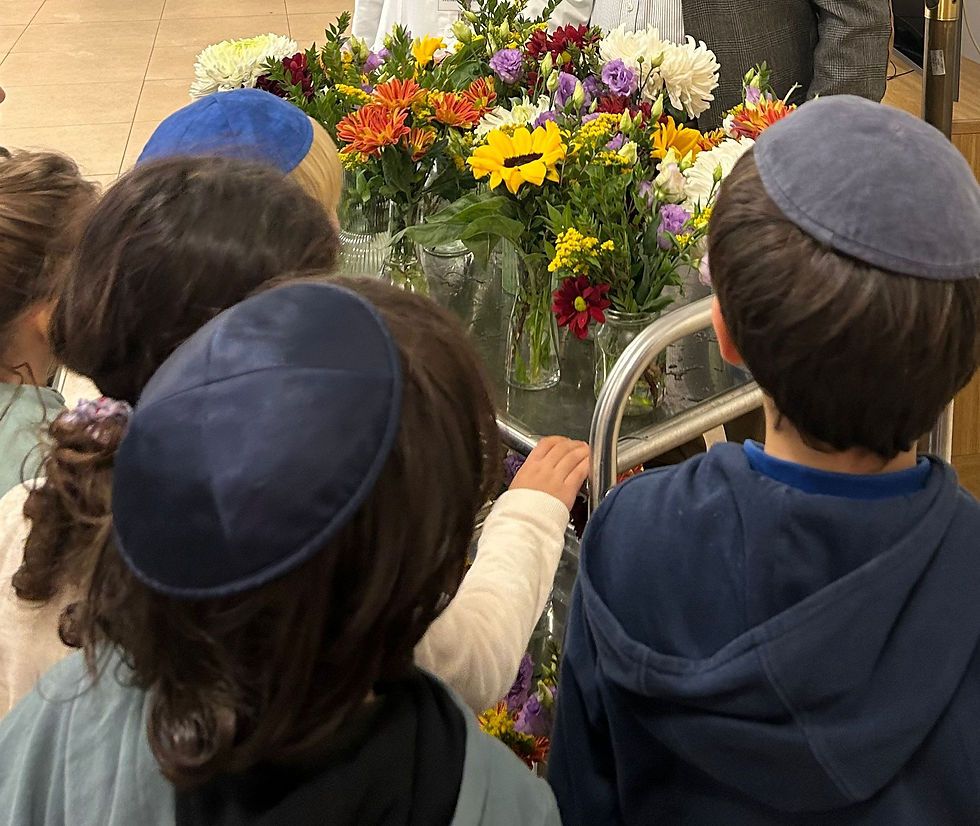
In our residential care home, there is so much more happening:
In the RSA of the Jewish Community, something truly precious takes place. Children come to visit the elderly. In these simple yet profound encounters, a bridge between generations is formed—built on listening, smiles and mutual curiosity.
For the elderly, the presence of children brings light, movement and vitality: it reminds them that life continues to grow and that their lived experiences still hold value to be passed on. For the younger ones, it is a unique opportunity to discover respect, memory and the importance of roots, learning that every personal story is a fundamental piece of our shared history.
Thus, in our RSA, these moments of encounter become a mutual gift that enriches the entire community.
Article by Luciano Bassani
Comments